Showing posts with label bee. Show all posts

Tuesday, March 18, 2014

You can help pollinators in your own garden

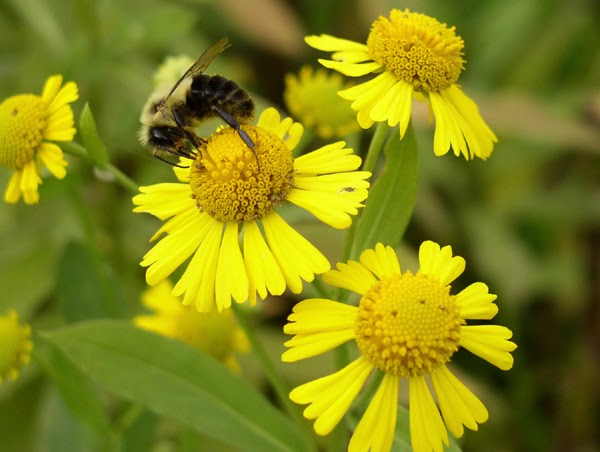
Bumble bee on Helenium © Beatriz Moisset
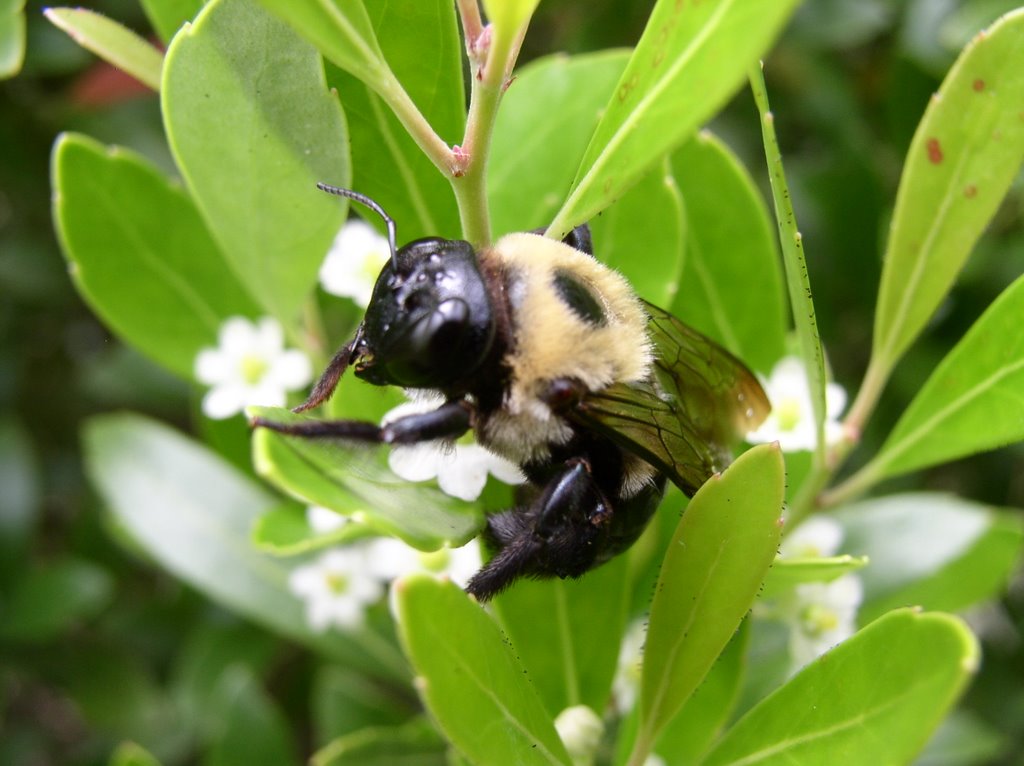
Plant a pollinator garden. Turn some of your lawn into a wildflower meadow. One major objection of gardeners, the fear of stings, doesn’t need to be a serious concern. Most native bees are quite different in this respect from honeybees and hornets; they hardly ever sting and if they do, it is very mild. In fact there are some, such as the Andrenids, that are incapable of doing so. Their stingers are too small to penetrate human skin.

Avoid pesticides or if you absolutely need to use them, inform yourself carefully about the specific pesticides that kill only the target species, rather than decimating many others unintentionally. Furthermore, avoiding pesticides may not be as bad as it sounds since nature has its own checks and balances and manages to keep most pests under control without resorting to pesticides. There are some cases in which use of pesticides backfires by destroying these checks and balances. Avoid herbicides also; they can be bad for pollinators. They either deprive them of food or poison them.

Fritillary on butterfly milkweed © Beatriz Moisset
Plant native flowers, that is flowers that grow locally, not just native to the United States; these are best for pollinators. Some bees may be able to adapt to non-native plants, such as many fruit trees or some of the less fancy cultivars. But native pollinators and native plants have become mutually adapted through millions of years, so they make the perfect match in most cases.

Small bee on fruit tree blossom © Beatriz Moisset
Grow a variety of flowers that bloom through the seasons. This is good for native bees; fortunately this is also what most gardeners aspire to have in their gardens. However highly selected cultivars or those with doubled-flowers don’t take care of the needs of pollinators. In general they have lost all the cues that pollinators need, such as scent. In some cases, they have also lost the pollen or nectar and so they don’t provide any food to bees.

Sunflower and bee © Beatriz Moisset

Plant the kind of lawn that provides habitat beneficial to bees. A perfectly manicured, pesticide saturated lawn is a desert to wildlife, including pollinators. Reducing the size of the lawn would benefit native pollinators. But it is also possible to have a lawn that is good for bees while being esthetically pleasing. As mentioned before, stay away from pesticides and herbicides as much as possible. Second, allow some small wildflowers; the look of your lawn may change as a result but it will continue to serve its purpose. Clover is great food for native bees; it also fixes nitrogen cutting down the need for fertilizers. Other small plants that benefit bees are ground speedwells (Veronica), wood sorrel (Oxalis acetosella), smartweeds or knotweeds (Polygonum), wild strawberries (Fragaria, several species), etc. Rather than calling them weeds we should call them grass companions or pollinator food.

Nests of solitary bees © Beatriz Moisset

Provide housing for bees. A simple bare spot here and there (no mulch or grass, just bare soil) may be enough for a few hard-working soil nesters. A sand pile may be even better. It bears repeating: There is no real need to worry about stings from solitary bees.

Dead logs or snags can supply housing for bees. You probably can’t have a dead tree on your property, but it is possible to keep a stump or a standing log and use it as an attractive planter; perhaps it will in turn provide housing for some little bees. Drilling holes on an old post or even a tree trunk would also make good nesting sites. They should be 3/32” to 3/8” in diameter and at least 4” deep.

Or you can make your own bee houses. It is possible and relatively easy to build one by following instructions posted in several websites. Or you can buy one; some resources listed below. I have discovered that watching the comings and goings of those busy mother bees can be as much fun as observing a bird house. Once again, stings don’t seem to be a real problem; I have had my face right in front of their houses and have even let them climb on my finger without any consequences.

Hollow tubes, just about the size of drinking straws, can also be used as bee nests. Some of the suppliers listed sell them. You can also tie up a bunch of hollow twigs, such as elderberry, or paper drinking straws (plastic ones are no good) together or pack them into a container such as a small milk or cream carton and place them horizontally. They should be closed at one end with the open end facing south or southeast. If you have trouble figuring out where the south is, step outside sometime between 10 AM and 1 PM and face the sun. That is how you want to place the nests. (See links below for instructions).

You can let some of your ornamental grasses stay all winter; they can be quite handsome and add variety to your winter landscape while providing nesting to your friendly native bees.

Helping the native bees would benefit us because of their invaluable services to the environment and to our gardens.

Pollinators and their multiple benefits © Beatriz Moisset


Resources
Ross, Edward S. (2003) Pollinator Conservation Handbook. The Xerces Society and The Bee Works. Portland, Oregon ISBN 0-9744475-0-1. (Bee gardens, bee houses, etc.)
The Xerces Society Guide (2011). Attracting Native Pollinators. Storey Publishing. ISBN 978-1-60342-695-4 (Everything you want to know about pollinators and their conservation)
Urban Bee Gardens. Berkeley University
Nests for Native Bees. The Xerces Society
Bee houses. National Wildlife Federation. (How to build a bee house)

Sellers of bee houses
Knox Cellars.
Mason bee homes.


List of articles
Beginners Guide to Pollinators and Other Flower Visitors


© Beatriz Moisset. 2014

Tuesday, October 08, 2013

Goldenrods and their Dependent Fauna

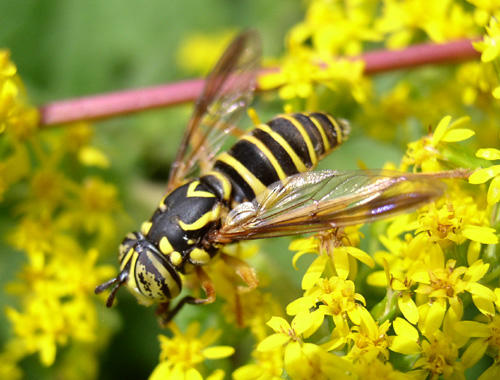
Blue-winged wasp on goldenrod

Goldenrods are magnets for a wide variety of animal life. I am talking about the six-legged and eight-legged fauna, insects and spiders.

I enjoy leading walks in the fall to observe all the bounty of tiny wildlife buzzing, zipping along, and crawling and hiding in the goldenrod patch. I call this program "The goldenrod zoo". My favorites are the pollinators; but I also like to point out the various kinds of galls and their amazing makers and residents.

Goldenrods used to be regarded as weeds in North America; many people still see them that way. Recently I heard a gardener, an organic gardener at that, who wants to eliminate them from her property. This made me think about the beneficial qualities of goldenrods, both to wildlife in general and to gardens in particular. So I started a list.
Goldenrod round galls in winter. One of them has been opened by a chickadee


Round galls are produced in the stems of tall goldenrods by a species of flies (the goldenrod fly). Gail Eichelberger described the fly’s life cycle in "The Gall of That Goldenrod" in "Beautiful Wildllife Garden." She also mentioned how the gall fly larvae can serve as food for chickadees and downy woodpeckers during the winter months. I will simply add that you can tell which of these two birds has opened each gall. Downies skillfully chisel a clean hole, while chickadees are sloppier, and destroy a good part of the gall to get to the prize.

There are a few other types of galls, produced by moths or flies, many of these insects also provide food for birds.
Sweat bee Agapostemon

Sweat bee Augochloropsis
Let us take a look at the goldenrod flowers visitors. There are at least 380 species that visit just one species, the Canada goldenrod (Solidago Canadensis). Not all of them are pollinators and many visit other flowers besides goldenrod. But they all benefit from these flowers’ nectar and pollen.
Syrphid fly, a good aphid control

Feather-legged fly, Tachinidae

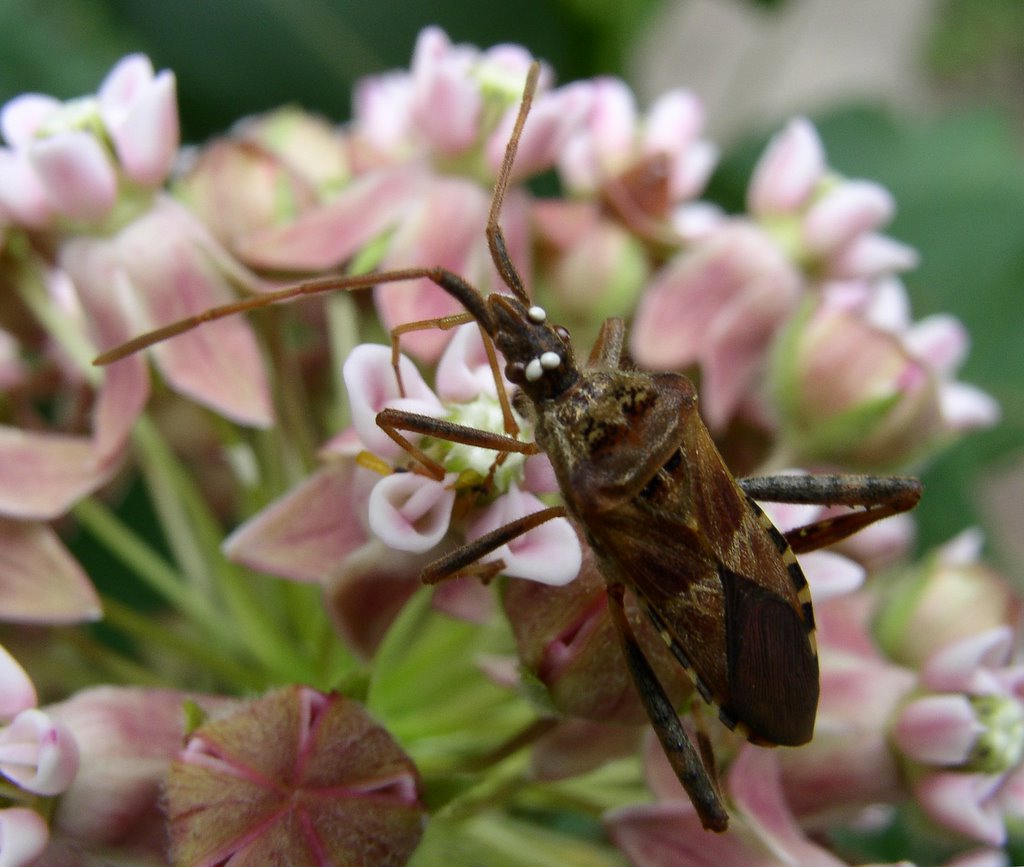
Leaf-footed bug. Notice the tachinid fly eggs on its head
Here I am listing a few whose larvae feed on other insects, so they provide an important ecosystem service as biological controls. The larvae of some Syrphid flies feed on aphids. Tachinid flies lay their eggs on other insects especially on stink bugs or related bugs which feed on plants.

Potter wasp


Wasps of many kinds are very abundant in the fall, so perhaps they are the most common visitors of goldenrod flowers. They include not just the more familiar and feared ones, hornets and yellow jackets, but also many solitary ones, which are less likely to sting. All of them catch insects or spiders to feed their larvae.

There is one in particular that has become a favorite of mine, the large and colorful blue-winged wasp, Scolia dubia. It is rather hairy and heavy-bodied, unlike most wasps. Its wings are supposedly blue, as the name suggests. But you need a little imagination, or the sunlight hitting them just right; otherwise they look smoky. The body is very dark blue-black, except for the last few segments of the abdomen which are reddish or orange with two bright large yellow spots.

The nice thing about this wasp is that its offspring feeds on the larvae of June beetles. The females spend a good deal of time searching the ground for beetle larvae and digging them out; this earns them their other common name: digger wasp. When a female wasp finds a grub, it paralyzes it. Then it digs a little deeper, builds a small chamber, and lays an egg on its victim. Gruesome, yes, but effective.

And here comes the best part: The blue-winged wasp has developed a taste for Japanese beetles and treats them the same way as June beetles. We all know that one of the most serious problems with introduced pests such as this is that they have left most of their enemies behind in the old country, so they can multiply unchecked. The USDA tried unsuccessfully to introduce some relatives of this wasp as biocontrols of the Japanese beetle. So it is wonderful to see that a native insect has become an enemy of the invasive pest.
Blue-winged wasp
Here’s to the blue-winged wasp and to the goldenrods that sustain it in the fall!

First published in "Native Plants and Wildlife Gardens" as "Goldenrod, a Weed or a Treasure?"


Beginners Guide to Pollinators and Other Flower Visitors

All photos by Beatriz Moisset. All rights reserved
© Beatriz Moisset. 2013


Friday, February 05, 2010

List of articles

Pollinators
Alfalfa Pollination
Ants, the Unlikely Pollinators
Bees and Vitamins
Bees in the Garden
Beguinners Guide to Pollinators
Blowflies are Pollinators Too
Bumble Bees and Odor Pollution
Bumble Bees and Turtleheads
A Busy Pollinator and a Relaxed One
Buzz Pollination of Fabaceae Flowers
Crab Spiders Hiding in Goldenrod
Don't Underestimate the Native Pollinators
Flower Flies, the Great Impersonators
Flower Longhorn Beetles, the Elegant Crowd 
Globetrotting Butterflies
More Globetrotting Butterflies
Globetrotting Skippers
Hairy-legged Fly, a Gardener's Friend
Importance of Native Pollinator
Magnolias and Beetle Pollination
The Mason Wasp and the Caterpillar
Metallic Green Bees 
Monarch Butterfly, a Case of Mistaken Identity
Monarchs and their Enemies
The Midge and the Chocolate Lover
My Bees and Climate Change
Native Bees, Honey Bees and Natural Areas
Of Bees and Honey. What is Honey for?
One Bite out of Three
One Bite out of Three and Wildlife
One Bite out of Three Before Columbus
Our Friend the Elephant Mosquito
Partners and Robbers
The Pure Magnificent Green Bee
Pollinator Gardens Do Double Duty
Pollinators in Winter
Pollinators of Official State Flowers
Pollinators of the American Chestnut
Pollinators, the Night Shift
Pollinators of the Pine Barrens, NJ
Roadside Pollinator Gardens and Traffic
Robbers and Thieves 
A Sea of Blue Flowers
Sneezeweed or Helenium
Sticky Pollen 
Symetry
Syrphus Fly, a Pollinator and Aphid Eater
The "Unbeetle" Beetle
Thrifty flowers
What is the Connection between Honey Bees and Almond Farming?
What is the Connection, II. Corn
You can Help Pollinators in your Own Garden

Moths as Pollinators
Black-and-yellow Lichen Moth, a Little Known Pollinator
Crambid Snout Moths
Gardening for Honorary Butterflies: Mint Moths
Hummingbird Moths. Where do They go in Winter?
Inch Worms: More Little Known Pollinators
Little Known Moth Pollinators: Seed Casebearers and Flower Moths
Metalmark Moths. More Little Known Pollinators
Noctuids, Another Family of Little Known Pollinators
Plume Moths. More Little Known Pollinators
Pollinators, the Night Shift
Yellow-collared Scape Moth
The Yucca Moth and the Yucca
Zygaenidae, More Little Known Pollinators 

Bee Houses
Bees in the Garden
Pollinators in Winter

Gardening
Don't Kill Your Friends
Food for Wildlife
Ladybugs, Praying Mantis and Other So-called Beneficials. Are They?
Lawns for Pollinators, Grass Companions
Lawn for Pollinators. Part II
Lawn for Pollinators. Part III
In Praise of Bare Spots in the Garden
Pollinator Gardens and More
Pollinator Gardens Do Double Duty
Utilities Right of Way, Native Plants
You can Help Pollinators in your Own Garden

Pollinators in Winter
Globetrotting Butterflies
More Globetrotting Butterflies
Globetrotting Skippers
Wintering Pollinators
Pollinators in Winter. Fritillaries
Hummingbird Moths. Where do they go in Winter?

Flowers, their strategies
The Life of a Flower
Bumblebees and Turtleheads
Deceitful Flowers. Lady Slipper
Only Friends Welcome Here
Maple Flowers
Flowers Schedule
Inkberry Pollination
Jack-in-the-pulpit and its Cruel Deception
Nectar: Breakfast of Champions
Nectar: Drink with a Zing?
Where Have all the Spring Beauties Gone?

Biological Interactions
Alien Invasions
The Birds and the Bees. The True Story
Bugs in the Garden. Hornworm: Friend or Foe? Friend and Foe
Food Chain in the Milkweed Patch
Goats put to Service at Pennypack
Goldenrods and their Dependent Fauna
Goldenrods Fabulous Fauna
Goldenrod Galls and their Fauna
Goldenrod Galls, the Long Stemmed Ones
Hidden Life on a Pear Tree
How Much is a Bat Worth?
Introduced Species Develop Unexpected Relationships
Invisible Bird Food in the Foliage
Ladybugs, Praying Mantis and Other So-called Beneficials. Are They?
The Living Constellations Beneath our Feet
Mile-a-minute
Milkweed's Last Hooray
Milkweed's Last Hooray. Part II
Milkweeds, Monarchs and More: The Milkweed Community 
The Monarch's Breadbasket
Squirrels, Managers of the Forest
Stinging Nettle. Food for Butterflies and Food for Us
The Hornet's Nest
Turtles, Shorebirds and Us
Viburnum leaf beetle, an introduced pest
When did "Common Milkweed" Become Common?
Wildlife Food and Non-native Plants
The Year the Bears went Hungry

Birds
Caterpillars are for the Birds
Feed the Birds
Invisible Bird Food in the Foliage
“Locavore” Birds. Grow your own Birdseed
A River of Birds

Nature
Funny Larvae
Hidden Life on a Pear Tree 
Plastics are not Part of the Web of Life 
Pollinators: Too Much Light!
The Sounds of Nature
Utilities Right of Way. Native Plants
Wasps, Motherhood and Ultrasound

Biocontrols
Bugs in the Garden. Hornworm: Friend or Foe? Friend and Foe
Goats Put to Work at Pennypack
How Much is a Bat Worth?
Mile-a-Minute
Ladybugs, Praying Mantis and Other So-called Beneficials. Are They?
Pollinator Gardens Do Double Duty
Syrphus Fly, a Pollinator and Aphid Eater
The Prolific Aphids
The Hornet's Nest

Defenses against enemies
A Butterfly´s flashy colors
Bees and stingers

Little stories
A Night in the Life of a Working Mother
Floral Emissaries
For the Love of Flowers
The Dancing Grasses
Dancing in the Valley of the Lilies
Official State Insects
The Poop Bug and the Golden Beetle
The Year the Bears Went Hungry
Ladybeetles, the Good Ones and the not so Good

Thursday, October 01, 2009

Syrphus fly, a pollinator and aphid eater

Syrphus fly on Queen Anne's lace. © Beatriz Moisset. 2009
Among the many flower flies there are some that are beneficial to the garden in more ways than one. Flies of the genus Syrphus and also some of their relatives are moderately good pollinators when compared to bees. They visit flowers frequently because they need nectar to fuel their flight; the females also need protein rich pollen for their eggs to grow and mature. The reason why they are not as good as bees is that their bodies have very little hair so pollen doesn’t adhere very well to them. However what they lack in efficiency they make up in sheer numbers. In some instances flies are more abundant than bees and may end up providing a better service to some flowers.

The genus Syrphus counts with several species in North America. They are very hard to tell apart; as a matter of fact they are also hard to differentiate from their close relatives: Eupeodes. Entomologists need to examine them under the microscope and look for minute details of wings and other body parts to identify each species.

Beginners have an even harder time and frequently confuse them with bees, although their single pair of wings should be a clue that they are flies not bees. They are considerably smaller than honey bees but there are many species of native bees about the same size as Syrphus. There are other ways of telling these flies apart from bees; their antennae are very short and with a funny shape with a little appendage called an arista; their eyes are enormous and their legs skinnier than those of bees. As I mentioned before they are nearly hairless. Although they may look like bees you don’t need to fear their sting because they have none.

Larva feeding on aphids on a milkweed's leaf. © Beatriz Moisset. 2009
What is interesting about these flies is that in addition to being pollinators they are very helpful to your garden as larvae because they eat aphids. The female lays her eggs near an aphid colony. The tiny maggots that emerge from the eggs are blind and legless but they don’t seem to need those organs to find their food.

They promptly go to work helping themselves from the colony. It is odd to see some completely unconcerned aphids near a maggot devouring one of its sisters; they may even come close to inspect it. Each maggot needs a large numbers of aphids and about a couple of weeks to complete its growth. It finds a place to pupate, under a leaf or on the ground and emerges in a few days ready to start raising another family of pollinators/aphid eaters. Gardeners familiar with these qualities of Syrphus flies strive to grow the plants that will provide pollen and nectar to them to ensure that they do their duty as aphid patrol.

List of Articles

Guide to Pollinators and Other Flower Visitors

© Beatriz Moisset. 2009

Thursday, June 08, 2006

Inkberry pollination


Different flowers have different strategies for pollination. It is interesting to observe them and try to elucidate the interaction between flower and insect in the case of insect pollinated flowers. The small tree or shrub, inkberry (Ilex glabra), a relative of hollies, has numerous small flowers that attract a large number and variety of insects.


The name refers to the inky dark berries

I have observed insects of at least twenty five species visiting its flowers, among them: bees and bumblebees, several kinds of wasps, flies, butterflies and moths and also some beetles. Here are a few examples:

Thursday, December 22, 2005

ASCLEPIAS OR MILKWEED. Its Many Visitors

Plants of the genus Asclepias, better known as milkweeds because of its white, sticky sap, attract a huge variety of insects and other creatures. Its most famous resident is the monarch butterfly that depends on milkweeds for nutrition; but it is not the only one. Here is a small sample of the menagerie that you can find on a single plant of Asclepias.

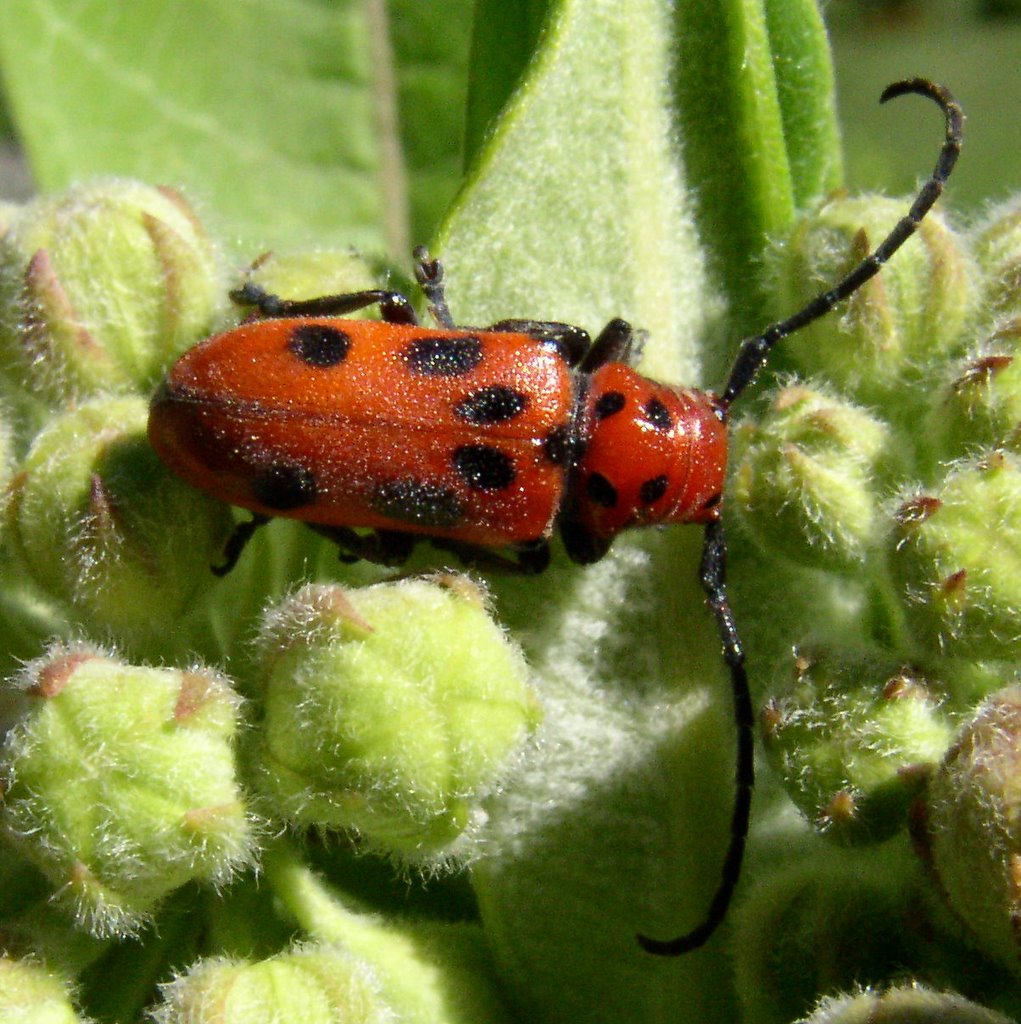
Milkweed beetle, Tetraopes tetrophthalmus (the four-eyed one)


Silver spotted skipper


Leaf-footed bug, with eggs of a parasitic fly on top of its head


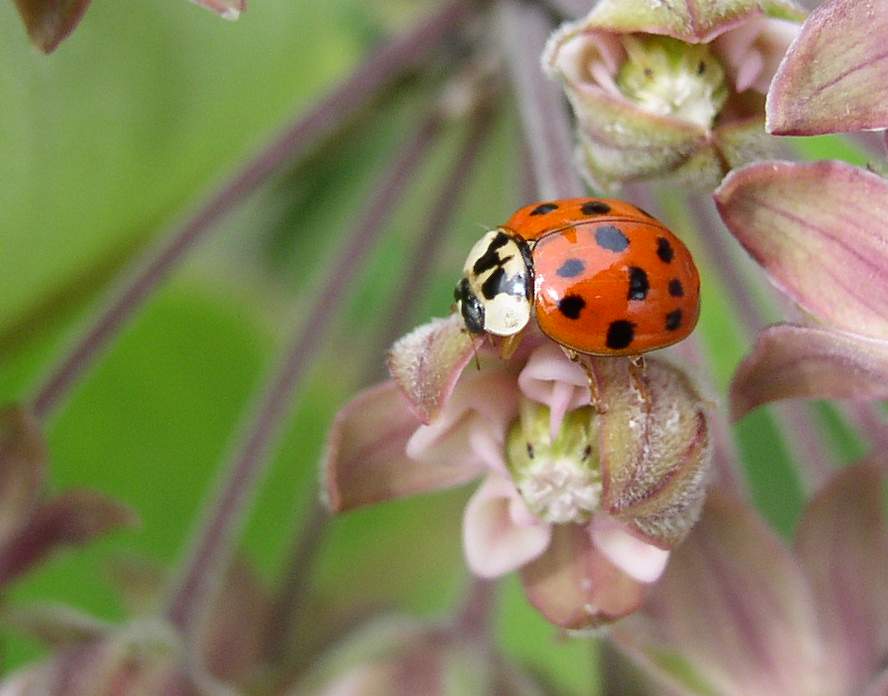
Lady bug in search of aphids.

Friday, October 07, 2005

Flower flies


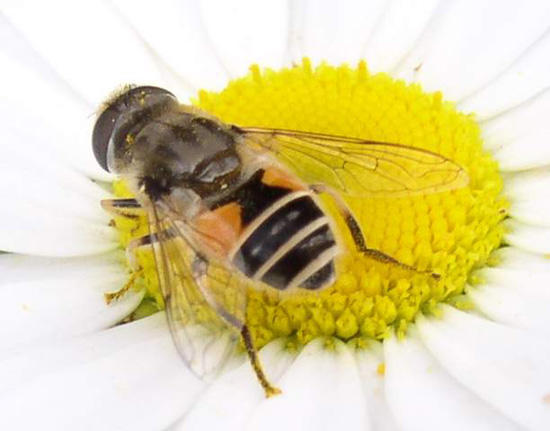
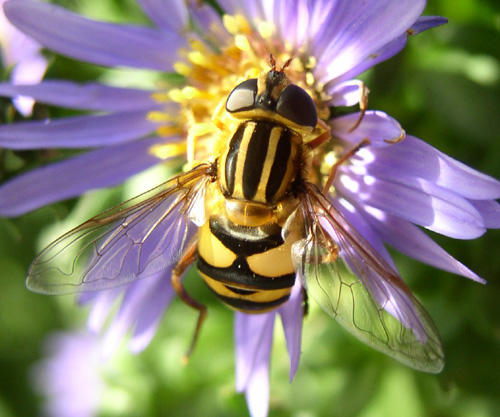
Flower flies, those tiny imitators, don’t look at all like the familiar house fly, instead they look like bees; with a disguise of yellow and black stripes.

They fool birds that avoid them for fear of being stung although they are innocuous.

Like the bees they imitate, many of them are good pollinators. Who would have thought that flies could be so pretty and so useful!


Some of them go a step further on their usefulness and eat a large number of aphids while they are larvae. Here