Showing posts with label pollinators. Show all posts

Tuesday, March 18, 2014

You can help pollinators in your own garden

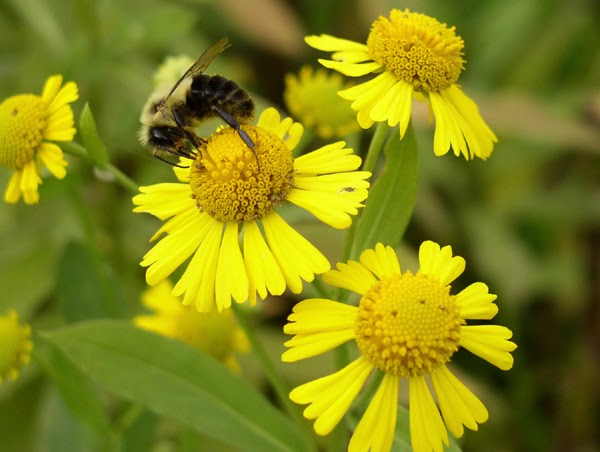
Bumble bee on Helenium © Beatriz Moisset
Plant a pollinator garden. Turn some of your lawn into a wildflower meadow. One major objection of gardeners, the fear of stings, doesn’t need to be a serious concern. Most native bees are quite different in this respect from honeybees and hornets; they hardly ever sting and if they do, it is very mild. In fact there are some, such as the Andrenids, that are incapable of doing so. Their stingers are too small to penetrate human skin.

Avoid pesticides or if you absolutely need to use them, inform yourself carefully about the specific pesticides that kill only the target species, rather than decimating many others unintentionally. Furthermore, avoiding pesticides may not be as bad as it sounds since nature has its own checks and balances and manages to keep most pests under control without resorting to pesticides. There are some cases in which use of pesticides backfires by destroying these checks and balances. Avoid herbicides also; they can be bad for pollinators. They either deprive them of food or poison them.

Fritillary on butterfly milkweed © Beatriz Moisset
Plant native flowers, that is flowers that grow locally, not just native to the United States; these are best for pollinators. Some bees may be able to adapt to non-native plants, such as many fruit trees or some of the less fancy cultivars. But native pollinators and native plants have become mutually adapted through millions of years, so they make the perfect match in most cases.

Small bee on fruit tree blossom © Beatriz Moisset
Grow a variety of flowers that bloom through the seasons. This is good for native bees; fortunately this is also what most gardeners aspire to have in their gardens. However highly selected cultivars or those with doubled-flowers don’t take care of the needs of pollinators. In general they have lost all the cues that pollinators need, such as scent. In some cases, they have also lost the pollen or nectar and so they don’t provide any food to bees.

Sunflower and bee © Beatriz Moisset

Plant the kind of lawn that provides habitat beneficial to bees. A perfectly manicured, pesticide saturated lawn is a desert to wildlife, including pollinators. Reducing the size of the lawn would benefit native pollinators. But it is also possible to have a lawn that is good for bees while being esthetically pleasing. As mentioned before, stay away from pesticides and herbicides as much as possible. Second, allow some small wildflowers; the look of your lawn may change as a result but it will continue to serve its purpose. Clover is great food for native bees; it also fixes nitrogen cutting down the need for fertilizers. Other small plants that benefit bees are ground speedwells (Veronica), wood sorrel (Oxalis acetosella), smartweeds or knotweeds (Polygonum), wild strawberries (Fragaria, several species), etc. Rather than calling them weeds we should call them grass companions or pollinator food.

Nests of solitary bees © Beatriz Moisset

Provide housing for bees. A simple bare spot here and there (no mulch or grass, just bare soil) may be enough for a few hard-working soil nesters. A sand pile may be even better. It bears repeating: There is no real need to worry about stings from solitary bees.

Dead logs or snags can supply housing for bees. You probably can’t have a dead tree on your property, but it is possible to keep a stump or a standing log and use it as an attractive planter; perhaps it will in turn provide housing for some little bees. Drilling holes on an old post or even a tree trunk would also make good nesting sites. They should be 3/32” to 3/8” in diameter and at least 4” deep.

Or you can make your own bee houses. It is possible and relatively easy to build one by following instructions posted in several websites. Or you can buy one; some resources listed below. I have discovered that watching the comings and goings of those busy mother bees can be as much fun as observing a bird house. Once again, stings don’t seem to be a real problem; I have had my face right in front of their houses and have even let them climb on my finger without any consequences.

Hollow tubes, just about the size of drinking straws, can also be used as bee nests. Some of the suppliers listed sell them. You can also tie up a bunch of hollow twigs, such as elderberry, or paper drinking straws (plastic ones are no good) together or pack them into a container such as a small milk or cream carton and place them horizontally. They should be closed at one end with the open end facing south or southeast. If you have trouble figuring out where the south is, step outside sometime between 10 AM and 1 PM and face the sun. That is how you want to place the nests. (See links below for instructions).

You can let some of your ornamental grasses stay all winter; they can be quite handsome and add variety to your winter landscape while providing nesting to your friendly native bees.

Helping the native bees would benefit us because of their invaluable services to the environment and to our gardens.

Pollinators and their multiple benefits © Beatriz Moisset


Resources
Ross, Edward S. (2003) Pollinator Conservation Handbook. The Xerces Society and The Bee Works. Portland, Oregon ISBN 0-9744475-0-1. (Bee gardens, bee houses, etc.)
The Xerces Society Guide (2011). Attracting Native Pollinators. Storey Publishing. ISBN 978-1-60342-695-4 (Everything you want to know about pollinators and their conservation)
Urban Bee Gardens. Berkeley University
Nests for Native Bees. The Xerces Society
Bee houses. National Wildlife Federation. (How to build a bee house)

Sellers of bee houses
Knox Cellars.
Mason bee homes.


List of articles
Beginners Guide to Pollinators and Other Flower Visitors


© Beatriz Moisset. 2014

Friday, May 06, 2011

In praise of bare spots in the garden

Eastern tailed blue butterfly on clover
Some gardeners consider any exposed earth as a blemish in need of a cure, be it mulching or reseeding the lawn and watering. But in a well balanced ecosystem even bare spots have a place, and a very important one at that.
How so? Because they provide habitat and housing for an array of unappreciated garden helpers. We should know more about them. The list is long, so I will not try to cover them all, just illustrate a few interesting ones.


Butterflies. We all love butterflies and associate them with flowers and nectar drinking, but the fact is that after they fill up their tummies with nectar; they still need other nutrients, salts. One way of getting the needed salts is to take them from moist soil. It is not uncommon to see a group of butterflies, either all of the same species or several species amiable mixed together, basking in the sun while sticking their long tongues on the wet soil to extract some minerals or drink some water. Many gardeners attract butterflies by providing flowers for nectaring and plants for feeding their young. It helps to go a step further and provide them with some much needed bare ground.

Clustering of bee nests next to a parking lot

Bees. Bees are the most important pollinators, not just honey bees but the countless species of solitary bees. Most species of bees don’t make hives like honey bees. Instead they lead solitary lives, each one tending her own brood. Some nest in hollow twigs or similar holes, but the great majority nest in tunnels underground. Sometimes they cluster their nests near each other creating veritable towns; other times they take advantage of any small patch of bare soil and build their nests there. In general they prefer sunny and well drained spots.

Square headed wasp at her nest

Solitary wasps. Just like bees there are numerous species of solitary wasps that nest in the ground. Many wasps visit flowers for nectar and perform some pollination. But, perhaps more importantly, they hunt for insects to feed their young. A healthy population of solitary wasps would cut down the need for pesticides significantly. Solitary wasps, as well as solitary bees, are not likely to sting and even if they do so when molested their sting is very mild.

Tiger beetle stalking its prey
Tiger beetles. Another form of pest control is the very colorful metallic green tiger beetle. Tiger beetles belong to a group called ground beetles for obvious reasons. They spend most of the time on or in the ground. Tiger beetles are ferocious hunters of insects. If you provide them with some bare soil you can count on them for keeping pest populations down.

In summary, bare spots contribute to the balance of the garden ecosystem. They provide food or habitat for a number of garden helpers, namely pollinators and pest controls. When you consider all their benefits you wonder why we are so unwilling to tolerate them. Shouldn’t we look at them as an integral part of the garden? There are some gardeners that intentionally make some sand piles and make sure that no pesticides get to them.

Beginners Guide to Pollinators and Other Flower Visitors


List of articles

Tuesday, February 02, 2010

Dancing in the Valley of the Lilies

The air was crystal clear in the meadow under the warm May sun, blue sky above and blue camas lilies below. That was the Mountain Dawn Farm Prairie, surrounded by trees and by more blue in the distance, the Cascade Mountains.

Many flower visitors buzzed along coming and going busily, most of them bees and bumblebees, but there were others; one in particular caught our attention. It had emerged from the ground after long winter sleep, along with numerous brothers and sisters. We called him SBF, a silly name but we all knew what we were talking about. SBF was a handsome dance fly with bright eyes, a hunch on his back, a slender abdomen and a thin, long tongue that had earned him the other name by which it is known, dagger fly. He delved deeply into flowers with his tongue and drank the nectar. He could also use his dagger for other purposes as we'll see later.

The nectar fueled his flight and he was doing a lot of flying that day. In his short life as an adult he had only one purpose, to find the girl of his dreams, seduce her with a well chosen present and make love to her. If time allowed he would find another girl of his dreams the next day. But for now he was busy searching for a wedding present that could satisfy the most demanding damsel. Midges were perhaps the best choice. He wanted one big enough to be appealing to his intended but not too heavy that he could not carry it for a certain stretch of time. He knew that at some point he would end up carrying both the prey and his beloved, so he had to make a careful choice.
When he saw a suitable one, he quickly pounced on it and stabbed it repeatedly with his dagger to subdue it and also to start preparing the delicious meal that he knew ladies willing to mate would favor.

After that he wrapped his gift with silk of his own making. Then he flew through the meadow in search of a meeting place, the equivalent of a singles bar. How do dance flies know where to congregate? I wouldn't know. But he did find a gathering with several suitors holding nuptial presents, just like the one he was carrying. He noticed with satisfaction that his gift compared favorably to most of the others. He joined the group suspended on the air, flying up and down, back and forth, holding his precious cargo on front of him, just as all the other bachelors. If you come into a cloud of them, you would think that they are dancing. That is how they got their name. More and more bachelor flies joined the ranks of dancers, all of them holding a present and all of them quivering with expectations and desire.

Meanwhile, somewhere in the same meadow a young female had emerged from the ground, the same as her brothers and had started her search. She looked very similar to the boys with one big difference, instead of a slender belly; hers was like an oval, loaded with eggs. Let us call her FBF. For those of you who are wondering about the names, SBF is a nickname, the full name being: Skinny Black Fly, so it is only appropriate that his plumper female relative be called Fat Black Fly. FBF needed protein to nourish the eggs that were her future children but she wasn't about to waste her precious energy on the search for food. She would let her lover take care of that. So she tried to make herself more seductive in order to attract the best suitor, one strong enough to provide a worthy and nutritious gift. Knowing that the males love well endowed ladies she plumped her stomach as much as she could. A little deception doesn't hurt, besides the boys were not beneath adding extra wrapping to their presents making them look bigger than they really were, so they were even. A fat belly in a female is a sign that she has a full load of mature eggs; neither he nor she knows that but they behave as if they knew it.
Off she went searching for the nearest gathering, wondering if she would find her knight in shining armor. Arriving at a meeting place, one handsome fellow caught her eye immediately, it was SBF. The gift that he was holding looked quite satisfactory so she approached him avoiding one or two overly eager fellows with their puny offerings. SBF was overjoyed when he saw her and gave her his package. She took it without ceremony and proceeded to devour the delicacy folding her wings and letting him carry her. For a few seconds the extra weight caught SBF by surprise but he quickly adjusted to it and flew some distance seeking privacy. There was no time to wait. He wanted to make love to her for as long as the meal permitted and so he did.

There isn't very much else to tell about this brief romance, other than soon FBF found the right place on the ground. It had some rich decomposing organic matter that would supply nourishment to her future babies and also warmth and shelter through the long months of winter. She laid her eggs there starting the new generation that would repeat the flower visits and the sun dance the next May.

List of articles

Monday, October 05, 2009

The Midge and the Chocolate Lover

What does a midge have to do with chocolate? More than you think. Chocolate comes from cocoa trees that grow in the tropics. These trees look quite different from most other plants. Instead of having flowers in the most conspicuous places, they have them on the trunk and lowest branches. These flowers are small and white and face down, the reason for all this is that they attract tiny flies, known as midges, rather than bees or other better known pollinators. The midges are ordinarily attracted to fungus and cocoa flowers smell somewhat mushroomy, too. In essence, for the cocoa tree to bear fruit, first it has to be pollinated by midges.
Think about it next time you eat a bite of that marvelous thing known as chocolate.

List of articles

Thursday, October 01, 2009

Syrphus fly, a pollinator and aphid eater

Syrphus fly on Queen Anne's lace. © Beatriz Moisset. 2009
Among the many flower flies there are some that are beneficial to the garden in more ways than one. Flies of the genus Syrphus and also some of their relatives are moderately good pollinators when compared to bees. They visit flowers frequently because they need nectar to fuel their flight; the females also need protein rich pollen for their eggs to grow and mature. The reason why they are not as good as bees is that their bodies have very little hair so pollen doesn’t adhere very well to them. However what they lack in efficiency they make up in sheer numbers. In some instances flies are more abundant than bees and may end up providing a better service to some flowers.

The genus Syrphus counts with several species in North America. They are very hard to tell apart; as a matter of fact they are also hard to differentiate from their close relatives: Eupeodes. Entomologists need to examine them under the microscope and look for minute details of wings and other body parts to identify each species.

Beginners have an even harder time and frequently confuse them with bees, although their single pair of wings should be a clue that they are flies not bees. They are considerably smaller than honey bees but there are many species of native bees about the same size as Syrphus. There are other ways of telling these flies apart from bees; their antennae are very short and with a funny shape with a little appendage called an arista; their eyes are enormous and their legs skinnier than those of bees. As I mentioned before they are nearly hairless. Although they may look like bees you don’t need to fear their sting because they have none.

Larva feeding on aphids on a milkweed's leaf. © Beatriz Moisset. 2009
What is interesting about these flies is that in addition to being pollinators they are very helpful to your garden as larvae because they eat aphids. The female lays her eggs near an aphid colony. The tiny maggots that emerge from the eggs are blind and legless but they don’t seem to need those organs to find their food.

They promptly go to work helping themselves from the colony. It is odd to see some completely unconcerned aphids near a maggot devouring one of its sisters; they may even come close to inspect it. Each maggot needs a large numbers of aphids and about a couple of weeks to complete its growth. It finds a place to pupate, under a leaf or on the ground and emerges in a few days ready to start raising another family of pollinators/aphid eaters. Gardeners familiar with these qualities of Syrphus flies strive to grow the plants that will provide pollen and nectar to them to ensure that they do their duty as aphid patrol.

List of Articles

Guide to Pollinators and Other Flower Visitors

© Beatriz Moisset. 2009

Monday, September 07, 2009

The year the bears went hungry


Do you remember the children's book: Blueberries for Sal? Sally, a little girl, went blueberry picking with her mother every year. One day the two humans had a close encounter with a mother bear and her cub who were feeding on berries in the same blueberry hill. Both bears and humans decided to leave each other alone and continued their activities in opposite sides of the same hill. The thrill of this encounter remained firmly embedded in the minds of Sal and her mother.

What the book didn't tell you is that a few years later Sal and her mother went blueberry picking as it was their habit and suffered a big disappointment when they found no blueberries. The plants looked very healthy but almost totally lacking in fruit. So they went to the store where they bought berries for their traditional annual jam.

The mother bear and her new cub went also blueberry picking as they did every year and their disappointment was bigger than that of the humans. To them the juicy fruits were vital and they could not resort to a grocery store. That winter they went to sleep very hungry and it is not known whether they survived that tough season after such deprivation.

What Sal and her mother didn't know and what the bears had no way to know was that there had been a severe infestation of the nearby spruce forest. The caterpillars of a moth had reached enormous numbers and were defoliating the forest. To combat such a pest the foresters had sprayed a powerful insecticide, not realizing the further consequences of this action.

Blueberries need to be pollinated by very diligent bees, not necessarily honey bees, but a wide array of native bees, in particular the so called blueberry bee. Many of these bees nest near the trees that had been sprayed to combat the spruce worm. This brought tragedy to the little bees. They were poisoned just as effectively as the spruce worm and died by the millions. As a consequence nobody pollinated the blueberry flowers and the shrubs produced no fruits.

When blueberry growers in the area realized what had happened, they rose up in arms. They finally succeeded in putting an end to the pesticide use. However, it took several years for the bee populations to recover and as a consequence blueberry bushes, as well as a number of other plants in the area, produced very limited amounts of fruits and seeds. Not only bears suffered the scarcity of berries, but also a number of wild creatures of the forest that also depend on such food, such as birds. It is quite possible that many of them died of hunger.

Let us hope that the health of the forests and surrounding fields was eventually restored, so that Sal, her children and grandchildren can go on enjoying this marvelous web of nature made of blueberries and bees and of birds and bears.

List of articles

Tuesday, February 13, 2007

National Pollinator Week

Pollinators are responsible for one third of the food we eat. Most fruits and vegetables have to be pollinated so that they can produce seeds. Also coffee, tea and chocolate need the services of pollinators.

Thursday, June 08, 2006

Inkberry pollination


Different flowers have different strategies for pollination. It is interesting to observe them and try to elucidate the interaction between flower and insect in the case of insect pollinated flowers. The small tree or shrub, inkberry (Ilex glabra), a relative of hollies, has numerous small flowers that attract a large number and variety of insects.


The name refers to the inky dark berries

I have observed insects of at least twenty five species visiting its flowers, among them: bees and bumblebees, several kinds of wasps, flies, butterflies and moths and also some beetles. Here are a few examples:

Tuesday, April 04, 2006

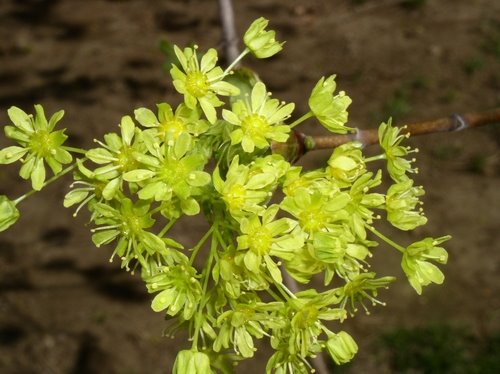
Maple flowers


Are maples pollinated by the wind or by insects? It seem that some species use one method and some the other. Their flowers are rather insignificant, at least to our eyes, but it is possible that insects see them differently; anyways sugar maple seems to be one that receives numerous visits from hungry bees that can't find much food so early in the season. Look at the flower, it is greenish yellow, very small, although by growing in clusters, they become more conspicuous and attractive to visitors, and they have some shiny, glistening fluid on the surface, touch it with the tip of your tongue and you'll feel a very tiny taste of maple syrup. Yes, that would make them very attractive to bees.

Wednesday, February 08, 2006

The butterflies of Yucatan


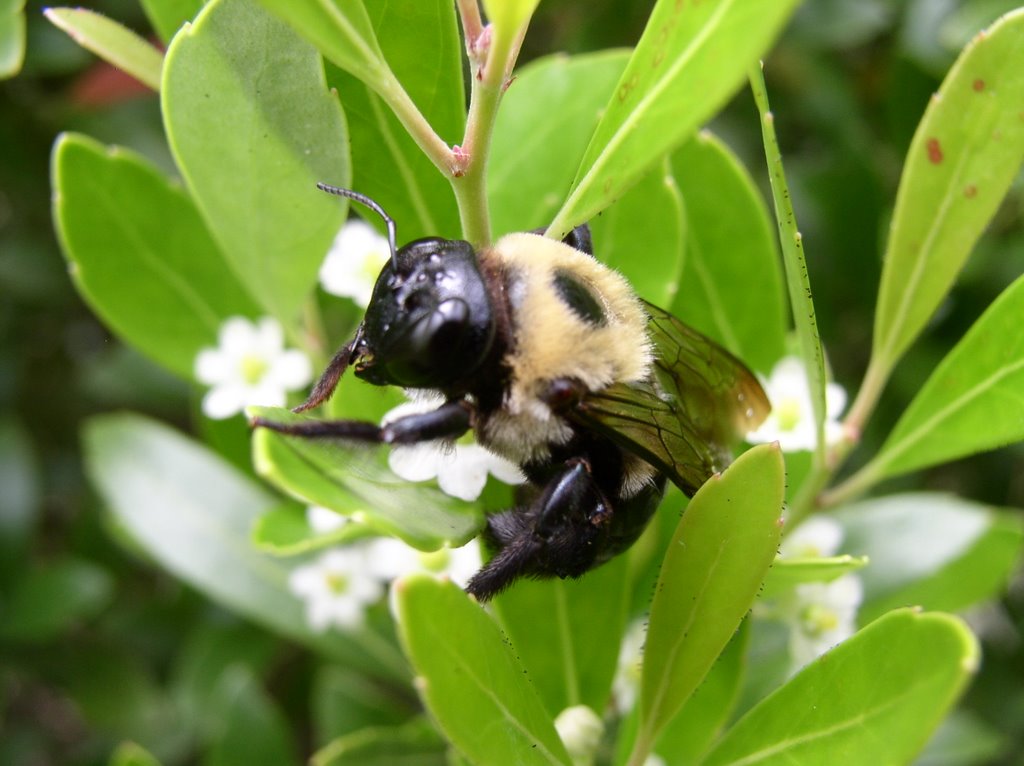
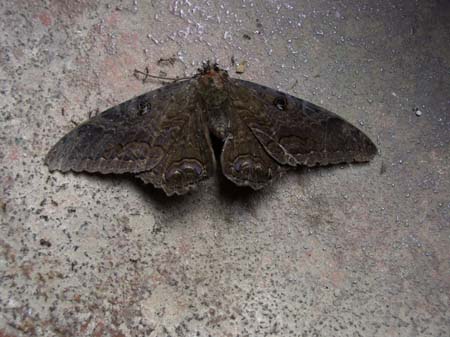
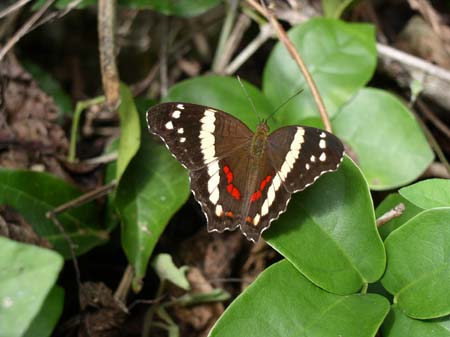
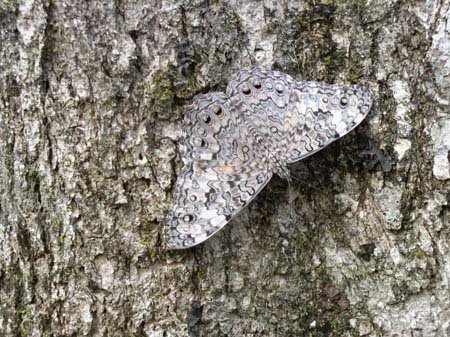
Some common butterflies and moths seen in Yucatan in January, 2006.