Plant
a pollinator garden. Turn some of your lawn into a wildflower meadow.
One major objection of gardeners, the fear of stings, doesn’t need to be
a serious concern. Most native bees are quite different in this respect
from honeybees and hornets; they hardly ever sting and if they do, it
is very mild. In fact there are some, such as the Andrenids, that are
incapable of doing so. Their stingers are too small to penetrate human
skin.
Avoid pesticides or if you absolutely need to use them,
inform yourself carefully about the specific pesticides that kill only
the target species, rather than decimating many others unintentionally.
Furthermore, avoiding pesticides may not be as bad as it sounds since
nature has its own checks and balances and manages to keep most pests
under control without resorting to pesticides. There are some cases in
which use of pesticides backfires by destroying these checks and
balances. Avoid herbicides also; they can be bad for pollinators. They
either deprive them of food or poison them.
Plant native flowers,
that is flowers that grow locally, not just native to the United States;
these are best for pollinators. Some bees may be able to adapt to
non-native plants, such as many fruit trees or some of the less fancy
cultivars. But native pollinators and native plants have become mutually
adapted through millions of years, so they make the perfect match in
most cases.
Grow a variety of flowers that bloom through the
seasons. This is good for native bees; fortunately this is also what
most gardeners aspire to have in their gardens. However highly selected
cultivars or those with doubled-flowers don’t take care of the needs of
pollinators. In general they have lost all the cues that pollinators
need, such as scent. In some cases, they have also lost the pollen or
nectar and so they don’t provide any food to bees.
Plant the kind
of lawn that provides habitat beneficial to bees. A perfectly manicured,
pesticide saturated lawn is a desert to wildlife, including
pollinators. Reducing the size of the lawn would benefit native
pollinators. But it is also possible to have a lawn that is good for
bees while being esthetically pleasing. As mentioned before, stay away
from pesticides and herbicides as much as possible. Second, allow some
small wildflowers; the look of your lawn may change as a result but it
will continue to serve its purpose. Clover is great food for native
bees; it also fixes nitrogen cutting down the need for fertilizers.
Other small plants that benefit bees are ground speedwells (
Veronica),
wood sorrel (
Oxalis acetosella), smartweeds or knotweeds (
Polygonum),
wild strawberries (
Fragaria, several species), etc. Rather than calling
them weeds we should call them grass companions or pollinator food.
Provide
housing for bees. A simple bare spot here and there (no mulch or grass,
just bare soil) may be enough for a few hard-working soil nesters. A
sand pile may be even better. It bears repeating: There is no real need
to worry about stings from solitary bees.
Dead logs or snags can
supply housing for bees. You probably can’t have a dead tree on your
property, but it is possible to keep a stump or a standing log and use
it as an attractive planter; perhaps it will in turn provide housing for
some little bees. Drilling holes on an old post or even a tree trunk
would also make good nesting sites. They should be 3/32” to 3/8” in
diameter and at least 4” deep.
Or you can make your own bee
houses. It is possible and relatively easy to build one by following
instructions posted in several websites. Or you can buy one; some
resources listed below. I have discovered that watching the comings and
goings of those busy mother bees can be as much fun as observing a bird
house. Once again, stings don’t seem to be a real problem; I have had my
face right in front of their houses and have even let them climb on my
finger without any consequences.
Hollow tubes, just about the size
of drinking straws, can also be used as bee nests. Some of the
suppliers listed sell them. You can also tie up a bunch of hollow twigs,
such as elderberry, or paper drinking straws (plastic ones are no good)
together or pack them into a container such as a small milk or cream
carton and place them horizontally. They should be closed at one end
with the open end facing south or southeast. If you have trouble
figuring out where the south is, step outside sometime between 10 AM and
1 PM and face the sun. That is how you want to place the nests. (See
links below for instructions).
You can let some of your ornamental
grasses stay all winter; they can be quite handsome and add variety to
your winter landscape while providing nesting to your friendly native
bees.
Helping the native bees would benefit us because of their invaluable services to the environment and to our gardens.
Resources
Ross,
Edward S. (2003) Pollinator Conservation Handbook. The Xerces Society
and The Bee Works. Portland, Oregon ISBN 0-9744475-0-1. (Bee gardens,
bee houses, etc.)
The Xerces Society Guide (2011). Attracting Native
Pollinators. Storey Publishing. ISBN 978-1-60342-695-4 (Everything you
want to know about pollinators and their conservation)
Urban Bee Gardens. Berkeley University
Nests for Native Bees. The Xerces Society
Bee houses. National Wildlife Federation. (How to build a bee house)
Sellers of bee houses
Knox Cellars.
Mason bee homes.
List of articles
Beginners
Guide to Pollinators and Other Flower Visitors
© Beatriz Moisset. 2014


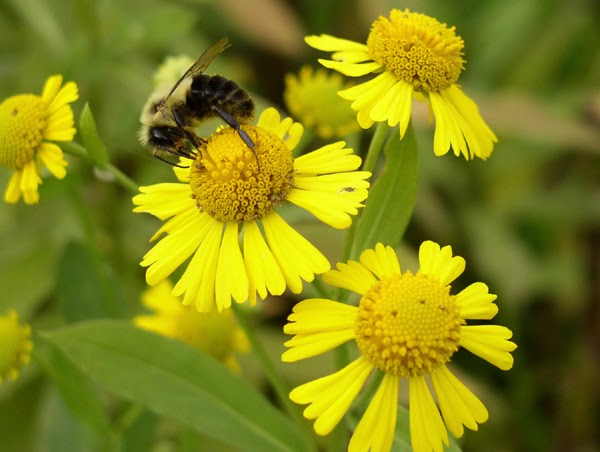



 I have observed insects of at least twenty five species visiting its flowers, among them: bees and bumblebees, several kinds of wasps, flies, butterflies and moths and also some beetles. Here are a few examples: